
One Kenya Build
By Steven Heumann
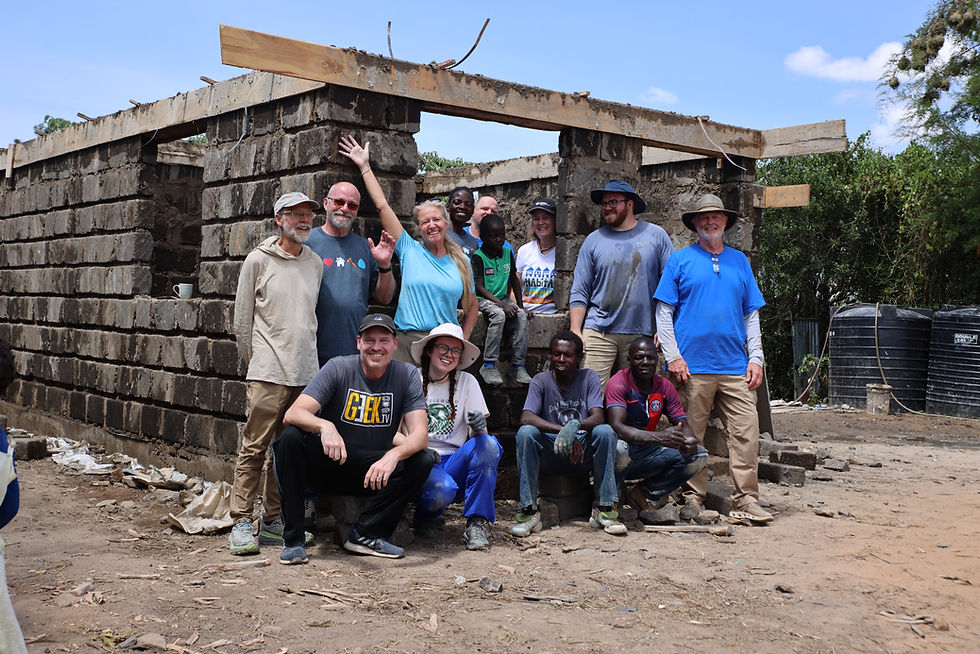
Bricks and mortar, concrete and steel.
No power tools. No electricity of any kind. No running water.
One house.
When I stepped off the plane in Kenya with the team of ten Americans from Habitat for Humanity, I really didn’t know what to expect. We had just spent the last 24 hours-plus traveling to the other side of the world. I knew what the plan was of course: to help build a house for a family living in poverty. I knew my role: document the build on film.
But I still had no idea what to really expect.
Habitat for Humanity is known for building homes for people in need across the world. I knew that was their mission, but my education on this trip was going to go far beyond my preconceived notions of charity and goodwill. What I learned about Habitat, and Africa, surprised me in the best ways.
Kenya isn’t terribly different from anywhere else in the world. The people are warm, the income divide is extreme, and community is far more important than it tends to be in the United States. It’s funny how the more possessions we have, the more cut-off we seem to become from the people around us. That being the case, when you have millions of people with very little in the way of material possessions, it should come as no surprise that the people around them become infinitely more valuable.
I saw it on the first day of the build.
We arrived in Laikipia County, a few hours north of Nairobi, right on the Equator. This is an arid landscape, but still far greener than most places in the Intermountain West. It certainly was not a desert by any means. Wild Zebra herds roamed the fields, and evidence of elephants knocking down trees in the night was evident many mornings as we drove to the site.
Dirt roads took us deep into the country, where we were introduced to Noel and her family. They had lived in a wooden shack with a dirt floor for over two decades, and now the Kenya affiliate for Habitat had partnered with them to build something more sustainable. The entire community was there to greet us, to sing and to dance. And as the work commenced on the foundation, the community was right beside us mixing cement and dumping gravel.
Noel and her family had never been alone, and they weren’t building alone, either.
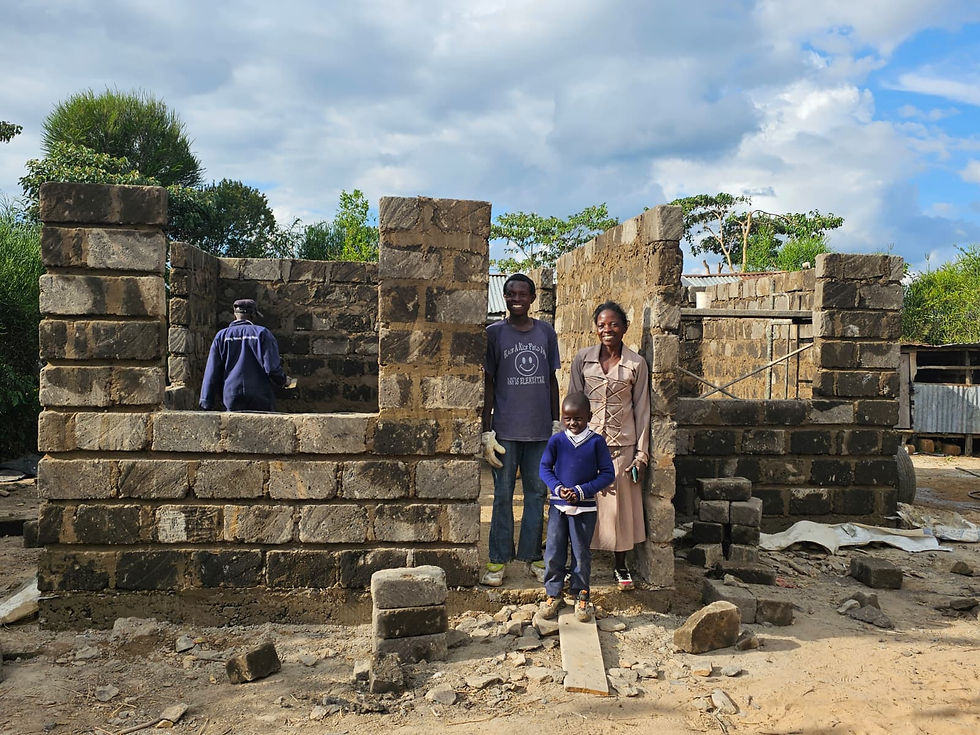
That was one of the first things our group learned. Our efforts, while helpful in the sense that many hands make light work, were not really necessary. The masons knew how to level each layer of block using tools that have been around for millennia. The community was there to serve the family, and happy to do it. We realized early on that we outsiders weren’t there to haul brick and fill gaps with mortar. We were there to learn that we really didn’t have everything figured out the way we thought we did. With all our technology and wealth, we found ourselves discovering how truly poor we really were. When was the last time I even saw my neighbors? When was the last time I had helped one of them in any significant way?
We were all pretty poor, not financially, but on a more profound level.
Joy seemed to permeate every aspect of the Kenya build. Smiles abounded. A local community leader had died that weekend and families would split time between the build site and the funeral to make sure both families were watched over. Gratitude swelled in everyone’s heart over the simplest embrace or the thought of the home going up before our eyes. Even though the new house would still lack running water and electricity, at one point Noel smiled and said, “This is the house the Lord has seen fit to bless me with. Praise be to the Lord!”
Her appreciation was infectious.
During the week-long build, we learned that Habitat for Humanity Kenya was constructing multiple houses at that same time. This happened to be the one where they could afford the extra time to let some Americans come and get in the way of the masons; where cultural knowledge could be exchanged; where the real Kenya could be experienced.
This wasn’t a vacation. We were immersed in the real world like we had never been before. We understood the struggles and the fight to survive, but we also understood the joy of friends and the power of community to raise everyone to a higher level of bliss.
Perhaps it would be something we could take home with us and use to improve things where poverty was far less stark, but where community had become a secondary focus.
I personally learned about the power of Habitat for Humanity and how 90% of the funds raised actually don’t go to places like Kenya or Guatemala, but how they stay in the local community where they are raised. Money donated in Salt Lak City stays in Salt Lake City. I learned how when poverty becomes more than just a political talking point, it can actually be addressed and effectively combated.

There may not have been electricity or running water; there may not have been the same conveniences that we take for granted, but what there was changed the way we all saw ourselves and the world around us. Maybe we don’t need all the things we think we do to be truly happy. Maybe those things actually detract from our happiness.
We didn’t have all the solutions we thought we did. How would that change us? How would it change our families? How would it change our communities?
At least we were starting to ask ourselves the right questions.
We wouldn’t have been able to do even that without Habitat for Humanity.
To learn more about Habitat for Humanity, CLICK HERE
To learn more about Habitat for Humanity Greater Salt Lake Area, CLICK HERE


Comments